


TRƯỜNG ĐẠI HỌC XÂY DỰNG HÀ NỘI
KHOA XD CÔNG TRÌNH THUỶ
FACULTY OF HYDRAULIC ENGINEERING
HANOI UNIVERSITY OF CIVIL ENGINEERING
A. FACULTY OF HYDRAULIC ENGINEERING
1. General introduction
The Faculty of Hydraulic Construction, formerly the Faculty of Irrigation – Port, is one of the first three Faculties of the University of Construction, officially established in 1966.
Up to now, after nearly half a century of construction and development, the Faculty of Hydraulic Construction has become one of the main training majors of the University of Construction, undertaking the responsibility of training, scientific research, technology transfer, and production labor in the field of construction in general and hydraulic construction in particular.
Technical staff trained from the Faculty of Hydraulic Construction have been taking on many leadership positions in agencies and units; commanding and managing large projects and construction sites across the country.
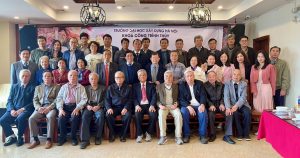
Teachers in the faculty of hydraulic engineering
2. Organization and personnel
2.1. Unit leaders:
2.2. Training industry
Faculty of Hydraulic Engineering directly trains 2 majors:
2.3. Faculty structure and organization
The faculty has 02 specialized departments; 01 specialized basic department; 01 Hydraulic Engineering Laboratory and 02 Research Institutes:
| Unit Name | Unit Head | |
| Port – Waterway Professional Group | Associate Professor, Dr. Vu Minh Tuan | |
| Irrigation – Hydropower Professional Group | Dr. Nguyen Phuong Lam | |
| Hydraulics – Hydrology Professional Group | Dr. Trinh Company | |
| Hydraulic Engineering Laboratory Professional Group | MSc. Pham Quang Thanh | |
| Institute of Science and Technology of Hydraulic Works | Dr. Nguyen Duc Hanh | |
| Institute of Port and Marine Engineering | Dr. Vu Quoc Hung |
2.4. Staff
The permanent staff of the Faculty of Hydraulic Construction includes 33 Lecturers; 02 civil servants, 06 staff members doing PhD studies at home and abroad, 02 Distinguished Teachers and 04 visiting Associate Professors and Doctors, current lecturers:
The Faculty of Hydraulic Construction provides undergraduate and postgraduate training in two disciplines:
After graduation, engineers trained at the Faculty of Hydraulic Construction may pursue a second bachelor’s degree in other majors offered by Hanoi University of Civil Engineering or by other universities, with the shortest possible study duration.
Outstanding students may continue their studies at the master’s or doctoral level at Hanoi University of Civil Engineering or at universities abroad.
6. Other activities
During their studies at school, in addition to classroom hours, students will participate in extracurricular activities, worker internships, technical internships, and visits to construction sites related to their major.
The Faculty’s extracurricular activities are very diverse. In addition to the general activities of the School, with the support of the Faculty Union and the Faculty Youth Union, the Faculty also has many professional activities, cultural, artistic and sports activities organized annually by teachers and students such as:
SOME PICTURES OF ACTIVITIES OF THE CTT DEPARTMENT
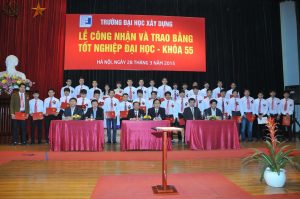
Image of the graduation ceremony of the Faculty of Information Technology, school year 2015
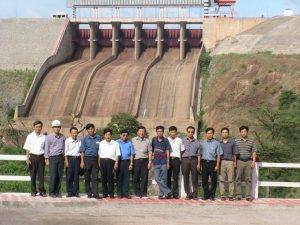
Image of teachers on Yali hydroelectric project.
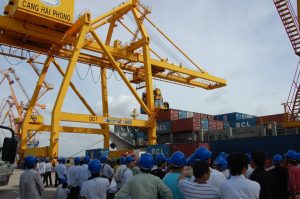
Image of student tour guide at Hai Phong port.
Faculty office address:
B. INTRODUCTION OF MAJORITIES AND SPECIALIZATIONS OF THE FACULTY OF HYDRAULIC ENGINEERING
1. Logistics and supply chain management industry.
1.1. Industry introduction
Logistics is a series of intermediary activities that include planning, implementing and controlling the flow of goods, controlling the source of input materials and final products, from the point of origin to the point of consumption. Logistics activities include transporting imported and exported goods, managing fleets, warehousing, raw materials, order fulfillment, inventory management, and supply/demand planning.
Supply chain management is a larger set of activities that includes all the chain management activities from raw materials to customers including planning and managing all activities involved in sourcing and purchasing and including all logistics activities.
Logistics and supply chain management jobs can be divided into four main areas:
1) Sourcing and purchasing planning.
2) Warehousing (inventory management, warehouse rental and storage services: renting or leasing warehouses for raw materials, equipment, container warehouses, international marketing, strategic management, building – managing systems of warehouse layout chains and warehouse connection points, …
3) Delivery (customs clearance agent and transportation planning, loading and unloading of goods, etc.)
4) Transportation (planning for cargo loading and unloading services, unloading or loading goods onto ships, vehicles, containers, multimodal transport such as road, rail and sea, full package transportation from the place of production to the place of consumption of goods with many different modes of transport, …
The Logistics industry associated with Supply Chain Management has gradually asserted its great role in the economy. With high profits of up to billions of dollars each year, the Logistics and CCU management industry is one of the most attractive industries today, and human resources in this industry are always sought after by many domestic and foreign companies.
1.2. Knowledge and skills acquired after graduation
1.2.1. Knowledge:
Ability to effectively develop management models in logistics and transportation service enterprises; customer relationship management; management of import and export freight forwarding processes; control of international transportation, insurance and payment methods;
Provides useful tools for assessing and assessing the diversity of business and global supply chain management environments, analyzing and designing domestic and international logistics systems. Learners are provided with core knowledge related to a range of supply chain activities, including demand planning, purchasing, inventory control, material handling, transportation, warehousing, packaging, product and service support, and supply chain management strategies. Key professional knowledge:
1.2.2. Skills:
Ability to synthesize knowledge, skills and operate flexibly in specialized fields;
Analyze and evaluate the impact on business operations;
Proficient in using some software and tools to prepare and present professional work reports;
Ability to self-study, improve qualifications, be creative, adapt well to career requirements and different working environments;
Have professional working methods, attitudes, awareness, scientific thinking, independent work, creativity, effective teamwork and good communication.
1.3. Scholarship opportunities and academic support
1.4. Job opportunities
After graduating with a broad range of general knowledge, Bachelor of Logistics and Supply Chain Management can work in many different professional positions, including: State management agencies on Logistics, supply chain management such as the Ministry of Industry and Trade, Ministry of Construction, Ministry of Transport…; Logistics Infrastructure Management Boards…; training and research facilities on logistics and supply chain; logistics service enterprises; specialized consulting units on transport infrastructure serving logistics; …
In addition, graduates of Logistics and Supply Chain Management can also have enough knowledge to work as scientific and technological researchers at research institutes; or study at the postgraduate level to become lecturers at training institutions.
1.5. Postgraduate study opportunities
After graduation, students have the opportunity to study for master’s and doctoral degrees at home and abroad.
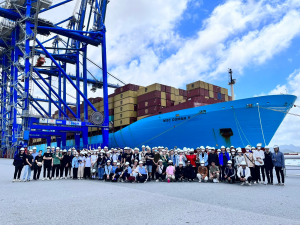
Specialized tour at Lach Huyen International Container Port
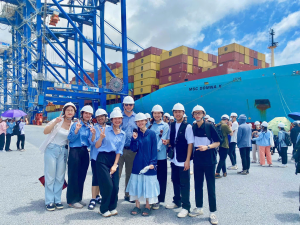
Specialized tour at Lach Huyen International Container Port

Application of technology in teaching and student practice
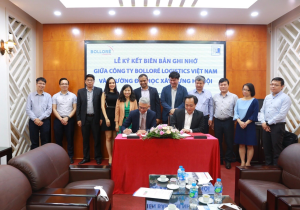
MOU signing ceremony between Logistics enterprises and HUCE
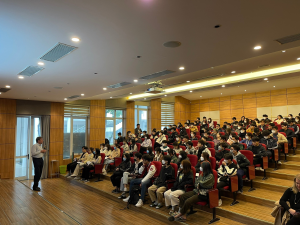
Seminar with foreign experts
2. Civil Engineering/Major in Hydraulic Engineering
2.1. Introduction to training majors
Vietnam with 3260km of coastline, along with a dense river system, abundant water resources and a large exclusive economic zone of sea and islands is a great resource and potential for construction and socio-economic development. Along with the development of the country and deep international integration; the demand for human resources in the field of hydraulic construction is very large in the present and the future.
The major in Hydraulic Engineering provides in-depth training in the following fields: investment; design; construction; project management; construction supervision; construction quality inspection. Works in the field of hydraulic engineering include: port works, waterways; works to protect coasts, islands, river banks; irrigation and hydroelectric works; dam and dyke works, etc.
After graduation, students have the capacity to implement, manage and lead the processes of forming ideas, designing, deploying and operating all types of hydraulic works, have creative thinking, research capacity and acquire advanced knowledge to serve the work.
2.2. Output standards of the training program
After graduation, students majoring in Hydraulic Engineering will receive a Bachelor of Engineering degree in Civil Engineering; have enough theoretical knowledge and practical skills to undertake jobs such as:
2.3. Scholarship opportunities and academic support
During the course of study, students will have many opportunities to receive scholarships:
2.4. Career position
Graduates of the Hydraulic Engineering major – Hanoi University of Civil Engineering always receive high appreciation for their professional qualifications and working capacity from employers; after graduation, students can work at:
2.5. Advanced learning opportunities
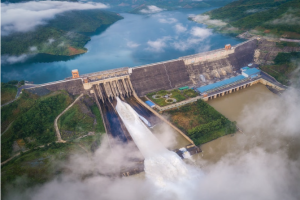
Son La Hydroelectric Plant
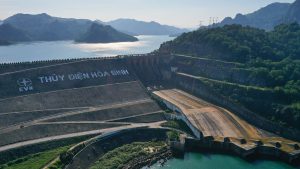
Hoa Binh Hydroelectric Plant
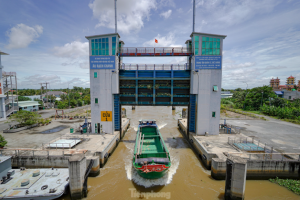
Rach Chanh Ship Wharf – Tan An City, Long An Province

Cai Lon – Cai Be super irrigation culvert, Kien Giang province

Cai Mep Port in Ba Ria – Vung Tau province
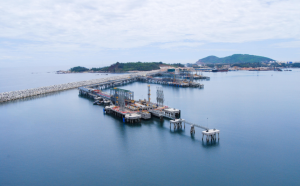
Dung Quat Refinery and Petrochemical Plant Port and Breakwater – Quang Ngai
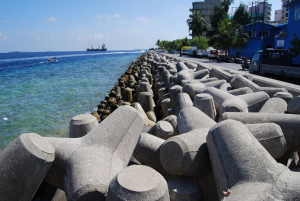
Coastal protection works
3. Contact the Faculty of Hydraulic Construction
Dr. Vu Quoc Hung – Deputy Head of Department, in charge of department: 0969000497
Associate Professor, Dr. Mai Sy Hung – Deputy Head of Department: 0913 559 282


 Tiếng Việt
 Chat với tư vấn viên
 Gọi ngay